


Rated Excellent
Trusted by 1000’s of customers
Earn Rewards
Get points with every purchase
Expert Advice
Professional tips for perfect detailingEasily remove new scratches, paint transfer or swirl marks on your vehicle using our selection of high-performance car scratch repair products. Use the #1 selling car scratch remover with our innovative Heal & Seal technology, safely eliminating scratches and leaving a long-lasting protective sealant. Perfect results that don’t wash away.
-
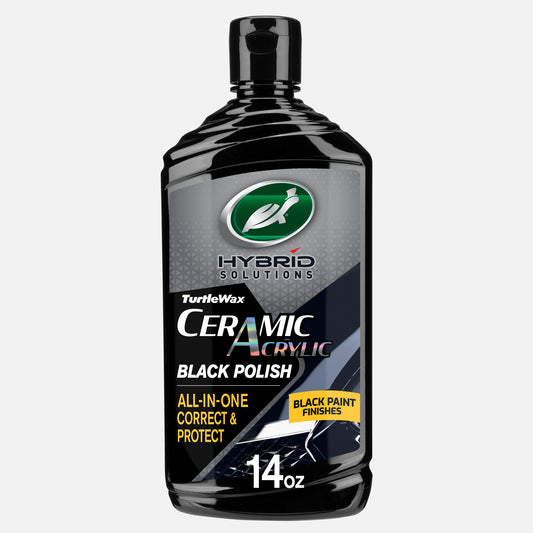
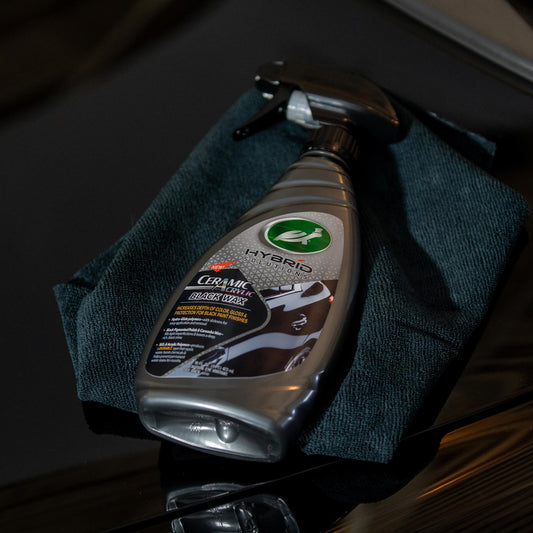
Hybrid Solutions® Ceramic Acrylic Black Polish, 14 fl oz
Regular price $18.00Sale price $18.00 Regular priceUnit price per -
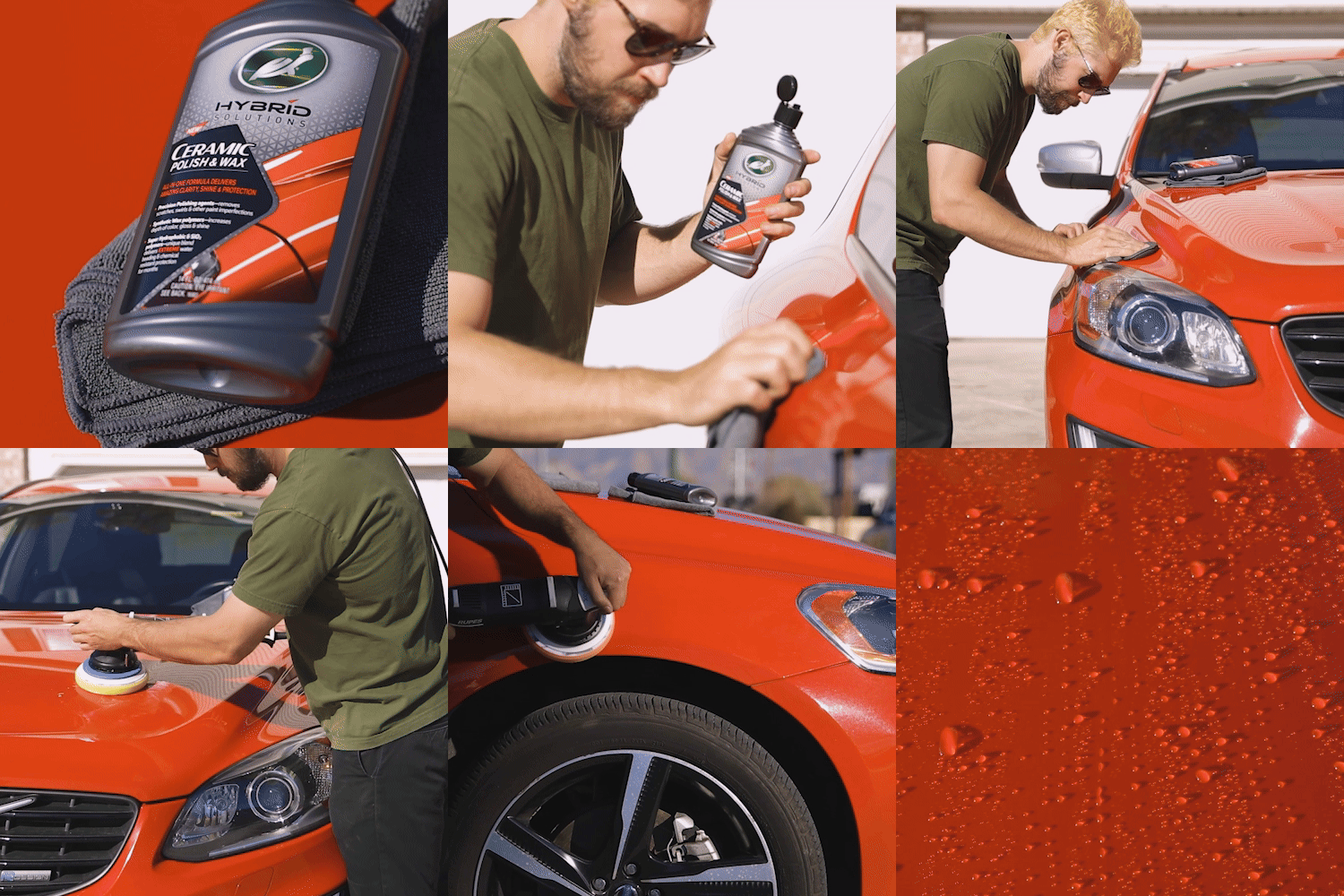
Hybrid Solutions® Ceramic Polish & Wax, 14 fl oz
Regular price $15.00Sale price $15.00 Regular priceUnit price per -
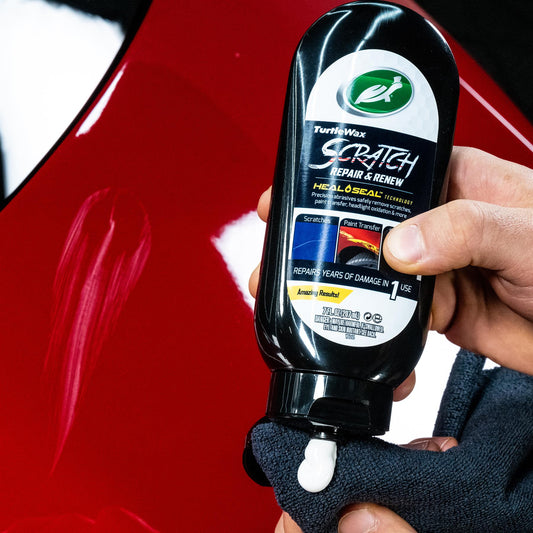
Scratch Repair & Renew, 7 fl oz
Regular price $12.00Sale price $12.00 Regular priceUnit price per -
Hybrid Solutions® Ceramic Acrylic Black Polish & Wax Double Pack
Regular price $25.00Sale price $25.00 Regular priceUnit price per -
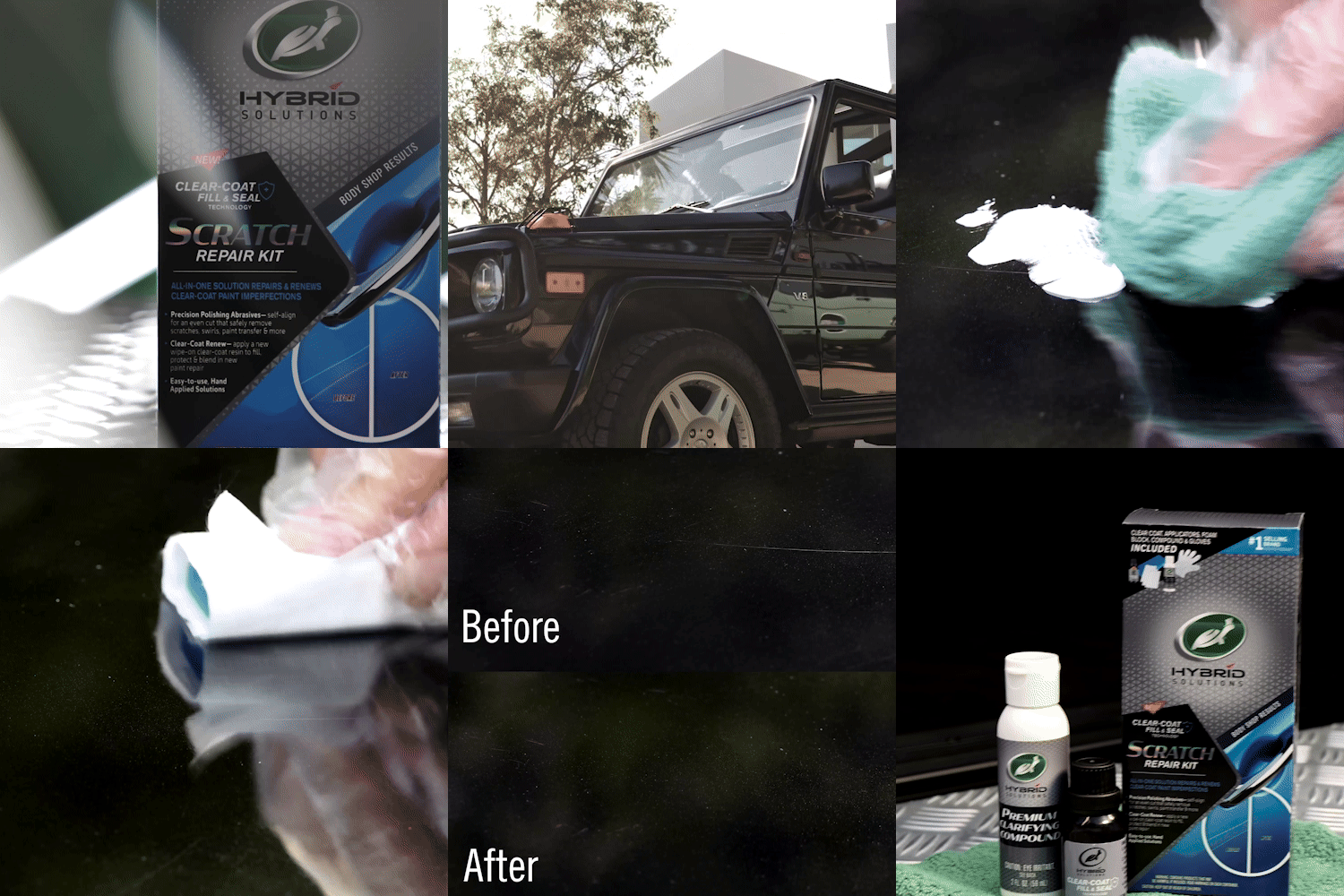
Hybrid Solutions® Scratch Repair Kit
Regular price $22.00Sale price $22.00 Regular priceUnit price per -
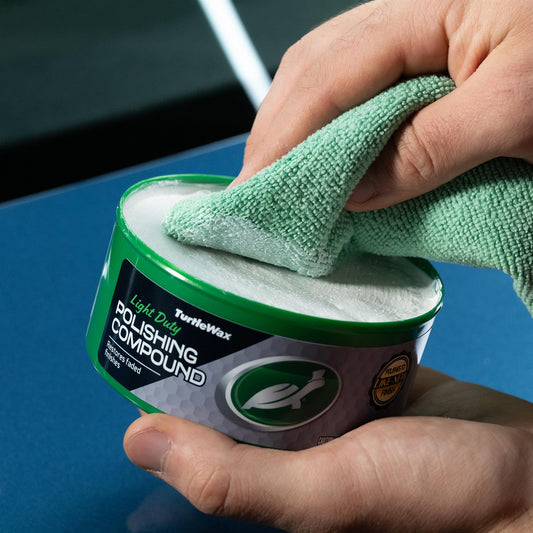
Light Duty Polishing Compound, 10.5 fl oz
Regular price $6.00Sale price $6.00 Regular priceUnit price per





How to Choose the Right Scratch Remover
Choose from a number of formulations, including Turtle Wax Scratch Repair and Renew with innovative Heal and Seal technology, our Hybrid Solutions Ceramic Polish & Wax or our all-in-one Premium Scratch Repair Kit for scratches, chips and scrapes of all sizes.
It’s important to match the scratch to the right scratch remover to get the best results, from surface scrapes to deeper scratches.
|
Product Name |
Scratch Type |
Best For |
Application Method |
Key Benefit |
Time Investment |
|
Light to heavy |
Scratches, swirls, water spots, paint contamination |
Hand or machine |
Permanent results with Heal & Seal technology |
3-5 minutes |
|
|
Deep scratches |
Scratches that reach the base coat, swirls, paint transfer |
Hand (wet sanding process) |
All-in-one kit for comprehensive repair |
15-20 minutes plus 24-hour cure |
|
|
Light scratches |
Light scratches, yellowing headlights, water spots, swirl marks, bugs |
Hand |
Quick and easy to use for gentle but powerful restoration |
1-2 minutes |
Understanding Car Scratch Damage (And What You Can Fix)
Does scratch remover work? This is probably a question you’ve asked yourself when faced with a scratch on your car. The answer is yes, but of course, there are limits when it comes to dealing with more intense car scratches. The best place to start is understanding your car’s paintwork and how to assess the depth of a scratch.
The 4 Layers of Your Car’s Paint
The exterior finish of a car is made up of four distinct layers, the first layer being the metal of the car itself. The deeper a scratch penetrates through these layers, the harder it is to repair.
- Primer coat - A primer is applied directly to the metal to create a smooth, even surface.
- Base Colour Coat - The layer on top of the primer is the base colour coat, and it’s this that gives the car its colour.
- Clear Coat - The top layer is a clear coat, and the thickest layer of the paintwork. This outer layer protects the colour beneath, both from oxidation and UV light. It’s the clear coat layer where most imperfections and scratches occur, and is the most easily fixed.
The Fingernail Test: Assessing Scratch Depth
This simple test helps you to determine the severity of a scratch and whether it’s reached through to the primer or the metal of your car. To do the test, gently drag your fingernail over a scratch. If your fingernail doesn’t catch, it’s likely to be only a clear coat scratch that can be fixed with a DIY repair at home.
If your fingernail does catch in the scratch, it’s likely deeper and may need touch-up paint or even a professional repair.
What Scratch Removers Can (And Can’t) Fix
It’s reasonable to wonder if DIY scratch repair kits actually work, and how well they work on different types of surface damage. Scratch remover kits are designed to repair surface scratches that only affect the top coat of a car’s paintwork. This includes things like swirl marks and light scratches, as well as paint transfer and oxidation.
What can’t be fixed at home with a DIY kit is any kind of deep gouge that reaches through to the metal layer. This also includes dents or paint chips and cracks. These types of damage mean it’s time to seek a professional repair.
Why Turtle Wax Scratch Repair Gets Permanent Results
Some of the uncertainty around DIY scratch repair comes from the different results provided by different products. Simply put, many brands only provide temporary scratch repair by using wax fillers. Our scratch remover kits provide professional and permanent results that don’t wash away. Plus, you don’t get the professional price tag.
- Heal & Seal Technology - Our all-in-one scratch repair kits eliminate the need to apply wax afterwards - the protective sealant is already applied during the quick and easy process.
- Precision Platelet Technology - Our unique self-aligning precision platelets make it incredibly easy to buff out scratches for a perfect result.
- Safe for all paints and colours - Our formula is safe for all paints and clear coats, attacking the scratch aggressively but precisely.
Common Scratch Scenarios (And How to Fix Them)
- Parking lot door dings - So long as the ding isn’t too deep (check with the fingernail test above), use Scratch Repair & Renew to deal with it. The Hybrid SolutionsⓇ Scratch Repair Kit is the best choice for heavier door scratches.
- Shopping cart impacts - A dent from a shopping cart will need professional repair, but if it’s just a scrape, you can use Scratch Repair & Renew to restore your paintwork.
- Automatic car wash swirl marks - Use Renew & Restore Wipes to easily remove those water spots and swirl marks.
- Tree branch or bush scratches - Light scratches from trees and bushes can usually be treated with Renew & Restore Wipes, or use Scratch Repair & Renew if the scrapes are deeper.
- Key scratches - A gouge from a key will likely need our Hybrid SolutionsⓇ Scratch Repair Kit for a successful repair, though it might need professional help if the scratch reaches through the paint to bare metal.
- Belt buckle or zipper marks - Catching your car with a belt buckle or zipper is easily done, and can usually be easily fixed with Renew & Restore Wipes or Scratch Repair & Renew if the scrape is a little deeper.
Getting a car scratch is always annoying, but it’s just a part of car ownership. They happen no matter how careful we are. Thankfully, most are easy to fix when you use the right product.
How to Use Scratch Remover (The Basics)
- Always start by cleaning the area thoroughly, washing and drying to remove any loose debris and dirt.
- Apply a small amount of product (usually a dime-sized dot) to a microfiber cloth or applicator. This is all you need - no special tools required.
- Work the product into the scratch in circular motions with gentle pressure for light scratches, or use a back-and-forth motion and more pressure for heavier scratches. It should only take a few minutes.
- Wipe away the residue.
- Check the results. If the scratch is gone, you’re done. Otherwise, you can repeat these steps to improve the result.
To get more detailed step-by-step instructions with photos, check out our complete guide to removing scratches from car surfaces.
Scratch Remover Product Formats Explained
Liquid Scratch Removers
Liquid scratch remover kits are easy to use and can be applied by hand. They’re best for light scratches and quick fixes, easy to apply with a microfiber cloth in just a few minutes. For example, our Scratch Repair & Renew is ideal for light to heavy scratches, water spots, and swirl marks.
Scratch Repair Kits
A more comprehensive scratch remover kit that can cover everything from light to deeper scratches, as well as other types of surface damage like swirl marks and paint transfer. These all-in-one kits include everything you need, such as an applicator, gloves, and the compound itself, like our Hybrid SolutionsⓇ Scratch Repair Kit.
Spray Scratch Removers
Spray scratch removers are best for light scuffs and scratches, especially over a larger surface area. A spray can be applied directly to the car’s surface and polished out by hand with a microfiber cloth. A simple and inexpensive choice for most minor scratches and surface scuffs.
Scratch Remover vs Other Paint Repair Solutions
Scratch Remover vs Rubbing Compound
Rubbing compound is a heavy-duty product that provides an aggressive cutting action for removing material from scratches and paint imperfections. It cuts away damaged material from the clear coat layer so a smoother surface can be revealed beneath. This then needs to be followed up with a polish to restore and protect the surface.
A scratch remover kit like our Hybrid SolutionsⓇ Scratch Repair Kit provides an all-in-one solution, combining cutting power to remove damaged material along with a smooth and protective finish.
Rubbing compound is generally best for heavy paint oxidation and stubborn marks and scratches, providing a robust cutting action to remove damage.
Scratch Remover vs Touch-Up Paint
Touch-up paint is sometimes needed if a scratch goes deep enough through the clear coat and exposes the bare metal or primer, or if surface rust has damaged the paintwork. Touch-up paint adds material to fill in deeper gouges, covering the exposed metal and protecting it from damage.
Scratch remover wouldn’t be sufficient if the damage is deep enough to expose metal. A scratch remover kit is designed to repair damage in the clear coat or base coat layers, leveling out the surface to restore a smooth and clean surface.
Scratch Remover vs Polish
Polish is for enhancing the shine and finish of your car’s paintwork and can only deal with the lightest marks and scuffs. To achieve the best finish, it’s best to thoroughly clean and dry your car before using a polishing product on its painted surfaces. A polish is applied by hand with a sponge or foam applicator before a final wipe with a clean microfiber cloth to get a glossy finish.
If you have any scratches to deal with, use a scratch remover kit to repair the damage before doing a final polish and wax.
Scratch Repair for Specific Paint Colors & Surfaces
Best Scratch Remover for Black Cars
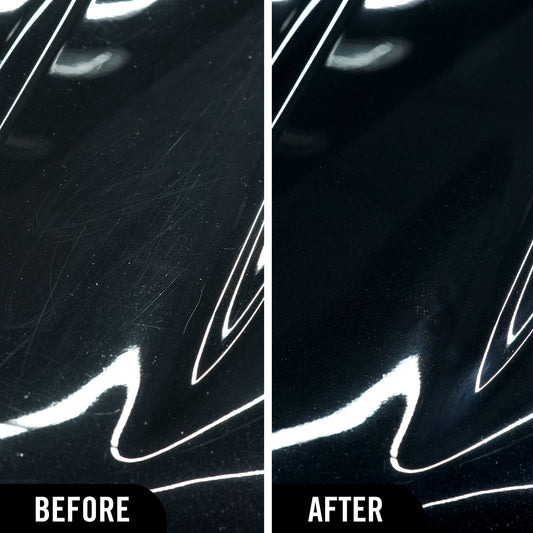
Surface imperfections can often show up more prominently on dark paintwork, from water marks to faint scratches. This can be made even worse if you use a product that leaves a white residue, further dulling what should be a rich, glossy shine.
For everyday paintwork faults on black cars, use something like our Hybrid SolutionsⓇ Ceramic Acrylic Black Polish. The black pigmentation in this product helps to correct imperfections in the paintwork, with precision platelet technology to smooth scratches and swirl marks.
Can You Use Scratch Remover on Plastic Trim?
Scratch removers are designed for use on the painted surfaces of your vehicle, and shouldn’t be used on any areas of rubber or plastic trim. Using paintwork scratch repair kits on plastic trim could actually risk causing further damage.
Instead, use a product specifically designed for trim, like our Hybrid SolutionsⓇ Graphene Acrylic Trim Restorer. This helps to bring back shine and deep colour to faded and dull areas of trim, as well as add UV protection against future damage.
Scratch Remover on Clear Coat vs Single-Stage Paint
Car paintwork has changed a lot over the decades, and modern cars have very different paint technology compared to older models. Modern cars have layers of primer, base coat and clear coat, while cars built before the 1980s may only have a single layer of paint.
The good news is that Turtle Wax products are safe to use on both, including our scratch repair kits and our polish and waxes.
DIY Scratch Repair vs Professional Body Shop
Many types of scratches can be successfully fixed with the DIY approach, and there are also times when it makes sense to choose a professional repair. Scratch repair kits can tackle a lot of everyday scratches and damage, but everything has its limitations. There are also plenty of situations where scratch repair kits could save you hundreds or even thousands of dollars at the body shop.
When to choose DIY products
- Scratches you can barely feel or can’t feel at all using the fingernail test.
- Swirl marks and light surface imperfections.
- Paint transfers and scuffs.
When to choose professional repair
- Deep scratches that penetrate through to bare metal.
- Large areas of damage, such as from a collision.
- Dents combined with scratches.
Maximizing Your Scratch Repair Results
Choose a good quality product, and you’re already halfway there - the rest is using the proper technique to achieve the best scratch repair results. We’ve got some tips to help you get those results with your DIY scratch repair:
- Start with a clean, dry surface - Thoroughly wash and dry the scratched area before starting the repair. Loose debris could end up causing new scratches as you work.
- Don’t work in direct sunlight - It’s best to keep your scratch repair area in the shade so products don’t dry too quickly.
- Use proper technique - Make sure to follow the product instructions, whether that’s gentle circular motions when applying, or using moderate pressure with back-and-forth motions.
- Patience pays off - Deeper scratches may need more than one application to get a good result.
- Follow up with wax or sealant - Leave the very best finish by waxing and sealing the repaired area. Or use our Scratch Repair & Renew with Heal & Seal technology.
Protecting Your Paint After Scratch Removal
Now that you’ve successfully repaired that scratch, it’s time to protect it. Not only does this protect your hard work, but it also helps to prevent future damage. UV protection helps to guard against oxidation, while the hydrophobic finish repels raindrops and makes for easier cleaning. You’ll also enhance that beautiful glossy finish, showing off your repair work.
Frequently Asked Questions About Scratch Removers
Does scratch remover actually work, or is it just temporary?
Yes, scratch remover kits do actually work, though different products may offer more or less permanent solutions. The key is that some products offer wax-based masking agents that will eventually wash away, while higher-quality products like those with Turtle Wax Heal & Seal technology will provide permanent scratch repair. The thing to remember is that even the best scratch repair products only work on clear coat damage, not gouges that reach bare metal.
What’s the difference between scratch remover and compound?
Compound is a heavy-duty product for more intense scratches and damage, designed to remove material before a follow-up treatment. Scratch remover is a product with a more balanced formula for everyday scratches and imperfections, combining effectiveness with ease of use. It also usually includes protective sealants for a more beginner-friendly product.
Can scratch remover fix deep scratches, or do I need touch-up paint?
Whether a DIY scratch remover kit will work depends on the severity of the scratch. Run your fingernail over the scratch to see how deep it is - if it catches, the scratch might be too deep for a repair kit. Scratch removers are designed for use on the clear coat or base coat layers of a car’s paintwork.
Touch-up paint is generally needed where the primer layer or bare metal of the car has been exposed. Just remember that deep scratches might be improved using these products, but may need professional repair to completely remove them.
How long do scratch remover results last?
With a high-quality scratch repair kit, the results are permanent. This means a scratch remover that removes clear coat and provides a new protective seal, such as Turtle Wax Heal & Seal formulas. Applying a wax or ceramic coating on top of the scratch repair will also help to protect it against future damage.
Will scratch remover work on black cars without leaving haze?
The extra challenge with black cars is the increased visibility of white residue, so it’s best to choose a product that doesn’t leave a haze behind. Turtle Wax scratch removers are designed to be wipe-clean, leaving no residue or haze when properly buffed out. Try our Hybrid SolutionsⓇ Ceramic Acrylic Black Polish for darker paintwork to get a really glossy finish.
Can I use scratch remover on plastic trim or headlights?
No, scratch removers can’t be used on plastic or rubber trims, and generally aren’t designed for headlights. They’re specifically formulated for paintwork and could damage other materials. However, there are specialized products for use on plastic trim, like our Hybrid SolutionsⓇ Graphene Acrylic Trim Restorer.
Do I need a buffer or a machine to use the scratch remover?
Hand applications are usually fine for most scratch remover kits, with no special tools required. A microfiber cloth can be the best option for getting a good result when combined with the right application technique for the product. Machines polishers can be faster but require more skill and experience to use effectively, as well as being expensive to purchase.
What’s better: scratch remover spray or paste?
Scratch remover spray can be quicker and more convenient, especially when used over a larger area, but it’s generally better suited to lighter scratches. Paste or liquid scratch removers provide more targeted and precise control, and are generally better for more severe scratches.
How many times can I apply scratch remover to the same area?
It’s usually safe to use scratch remover 3 to 5 times on the same area if you’re not getting a good enough result the first time. Check carefully after each application to see progress. If things aren’t improving after 5 applications, the scratch is likely too deep for DIY repair.
Is professional scratch repair better than DIY removal?
DIY scratch removal is usually effective for 80-90% of cases where the damage isn’t too severe. Professional repair is needed when a scratch is deep enough to expose bare metal, or for other damage like dents or larger areas of surface damage.
For more information, explore our How-To section for step-by-step guides on how to remove scratches or how to remove paint transfer from your car


