


Rated Excellent
Trusted by 1000’s of customers
Earn Rewards
Get points with every purchase
Expert Advice
Professional tips for perfect detailingBuff your chrome and metal finishes to a mirror-like shine with our collection of chrome and metal polish. Banish rusty chrome from your car or motorcycle, whether that’s a tarnished bumper or a rusted exhaust tip, with professional results that are easy to achieve at home. Turtle Wax products are infused with advanced corrosion inhibitors, powerful metal restorers that prevent future rust and oxidation, saving you time and money. They also work on aluminum, brass and stainless steel.
-
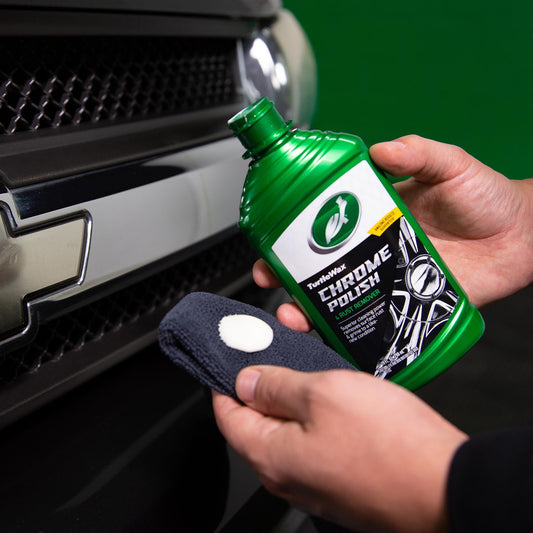
Chrome Polish & Rust Remover, 10 fl oz
Regular price $5.00Sale price $5.00 Regular priceUnit price per

Why Chrome & Metal Tarnish on Vehicles
Chrome provides one of the most beautiful and satisfying metallic finishes, but it can also be vulnerable to tarnishing. That gleaming chrome exhaust looked perfect when you bought it, but six months later, it’s lost some of that mirror sheen. Chrome is made up of a thin, electroplated coating on top of a base metal. This thin layer is vulnerable to environmental factors, causing it to chip or crack, exposing the metal underneath.
These environmental factors can depend on where you live, and include things like:
- Pollution in built-up areas
- Road salt, dust and dirt
- High humidity
Naturally, it’s the bumpers, wheels and exhausts that bear the brunt of corrosion from the road, so it’s these areas that usually show signs of tarnishing first.
Preventive maintenance is the best way to deal with chrome tarnishing, polishing with protective products like our Chrome Polish & Rust Remover.
Types of Metal on Your Car & Motorcycle
|
Metal Type |
Common Locations |
Characteristics |
Care Needs |
|
Chrome |
Bumpers, exhausts, trim, handlebars, fenders |
Thin electroplated coating over steel or brass |
Gentle polishing to avoid wearing through the coating |
|
Stainless Steel |
Exhausts, trim |
Rust-resistant, but loses shine over time |
Regular polishing to restore shine |
|
Aluminum |
Alloy wheels, motorcycle engine cases, trim |
Oxidizes to white powder over time |
Needs an aluminum-safe formula for cleaning and polishing |
|
Brass/Copper |
Classic car fixtures, decorative elements |
Develops green patina over time |
Cleaning and polishing with copper-safe formula |
Turtle Wax Chrome Polish & Rust Remover can be safely used across all these metal types, ideal for car wheels and trims, and motorcycle pipes, fenders, engine covers and more. Make sure those alloy wheels are clean before you start with our range of wheel cleaner products.
How to Polish Chrome & Metal: Step-by-Step
- Preparation - Any surface you want to polish must be clean and dry before you start. Thoroughly wash and dry to ensure any loose debris and dirt are removed.
- Application - Apply a quarter-sized amount of polish on a microfiber cloth or foam applicator.
- Technique - Working in sections of around 2x2 feet, polish in small circular motions with light pressure. Avoid pressing hard on chrome surfaces as this can wear away the thin coating. Polishing by hand will give you excellent results, with no special tools or machinery necessary.
- Working time - Let the product work for a couple of minutes after applying, but don’t let it fully dry on the surface, as it will become hazy. As an example, most exhaust tips will polish up completely in under 10 minutes.
- Removal - Buff the area with a clean microfiber cloth using a back-and-forth motion. Check your work to make sure the surface is evenly polished.
- Frequency - Light polishing should be done every 2-3 months to maintain the metal’s shine and finish.
- Tools - To apply safely and gently, keep a few microfiber cloths for polishing. Use one for applying the product and keep one clean for buffing afterwards. Alternatively, you could use a foam applicator if you prefer. Avoid paper towels as these can scratch metal coatings.
- Special considerations - Wheels require extra attention because of the brake dust that can build up. When polishing a motorcycle exhaust, make sure it’s completely cool and free from dust and dirt before starting.
Check out our comprehensive How-To section for tips, tricks and step-by-step guides to become a car care pro with articles such as how to clean your wheels and tires.
Chrome Polish for Cars vs Motorcycles
Chrome polish works for both cars and motorcycles, whether on trim, exhausts, bumpers or engine housing. Our Turtle Wax chrome polish is safe for use on cars and motorcycles. The difference is how polish is applied and the considerations to make before you start.
For cars, chrome features are generally more limited, such as bumpers and exhausts, and often more easily accessible.
Motorcycles, particularly cruiser or touring bikes, can have ten to twenty times more chrome than cars. This can include pipes, fenders, engine covers, handlebars, wheels and all sorts of decorative trims. The Added challenge with motorcycles is that most of these features are much more exposed to the elements.
Just remember to wash your motorcycle first and let everything get completely cool before polishing, particularly exhausts and pipework. Make sure to cover and protect the rubber or plastic trim next to the area you’re polishing, too.
Wheel & Rim Chrome Care
Wheels need the most attention when it comes to keeping that metal clean and polished. Brake dust can be corrosive, not to mention the constant exposure to dust and dirt from the road.
This is why it’s important to regularly wash your wheels, as well as polish them more frequently than other areas of your car or motorcycle. Use a wheel cleaner to remove brake dust build-up and other dirt, using a soft-bristle brush for awkward spaces between spokes.
Wheels don’t need to be removed to clean and polish, and are usually easily accessible. It should only take around 10-15 minutes of polishing per wheel to get them gleaming.
Common Chrome Problem Areas & Solutions
- Exhaust tips - Exhaust tips are constantly exposed to heat and debris, and can quickly become dull and discolored. Regularly wash the exhaust tip (when completely cool) to keep it clean, and use a metal polish with a protective sealant to minimize wear and tear.
- Bumpers and trim - As with the most exposed parts of a vehicle, bumpers and exterior trim are vulnerable to everything from stone chips to water marks and surface rust. Keep them clean with regular washing, and use a waterless wash spray for spot cleaning and ongoing protection.
- Door handles and mirrors - Door handles are constantly getting touched, transferring oils and tarnishing the finish. Keep them shiny with a quick detailer spray. Side mirrors are a very exposed part of a vehicle, so use a polish with hydrophobic properties and long-lasting protection.
- Motorcycle exhaust systems - Heat and road grime can dull and discolor the look of your motorcycle’s pipework, diminishing one of its best features, especially for cruisers. Use a heavy-duty cleaner to remove any dirt build-up, and polish and protect with a long-lasting metal polish.
- Classic car details - Those decorative details can easily trap dirt, such as grilles, badges, and metal trim. Keeping them clean is important, but a good polish will transform them and the overall look of your classic car. Our Chrome Polish & Rust Remover will bring shine to any metal trim.
Preventing Chrome Oxidation Long-Term
Restoring dull and oxidized chrome and other metal details back to life is very satisfying. But you can keep your car or motorcycle looking its best for longer with a few preventative measures, shifting your focus to maintenance rather than restoration.
Regular washing is key to removing those contaminants that can tarnish and corrode chrome and other metals. A light clean once a week, with a full wash at least once a month, depending on how often you drive the vehicle. Polishing should be part of this process, making use of products that provide long-term protection against contaminants. The best protection is to store your car or motorcycle in a garage or at least under cover.
Prevention is always the best approach, dealing with early signs of tarnishing before you have to deal with more serious corrosion or damage. $10 for a bottle of metal polish every so often is preferable to a $500 chrome re-plating or even a $1,000 bumper replacement.
Check out our FAQs below to get more advice on keeping your chrome looking its best.
Chrome & Metal Polish FAQs
Can I use the same chrome polish on my car and motorcycle?
Yes, chrome polish will work on any chromed vehicle trim or pipework, and even on chromed objects in your home. You only need one product to keep your car or motorcycle chrome looking great, though the amount you need will differ depending on the size of the area to be polished.
Will chrome polish remove rust from exhaust tips?
Light surface rust can be removed with chrome polish, though deeper rust may require more extensive restoration. This is why it's important to address any discoloration on chrome exhaust tips before it leads to more serious damage.
How often should I polish chrome on my vehicle?
Polish every 2-3 months to maintain chrome details, though areas that are more exposed might need more frequent attention. If you live near the coast or in a humid region, pay extra attention to signs of oxidation on your vehicle and polish as needed. Prevention with a regular light polish is always better than heavy restoration to remove damage.
What’s the difference between chrome polish and chrome cleaner?
Chrome cleaning products are designed to remove surface dirt and dust from trim, pipework and wheels. Chrome polish is for removing oxidation, restoring shine and providing long-term protection. Cleaning should always be done first to remove grime before using a chrome and metal polish.
Is chrome polish safe on aluminum wheels?
So long as the product specifies, chrome polish is usually safe to use on any metals (such as Turtle Wax Chrome Polish & Rust Remover). However, if you want to polish aluminum or another metal that’s severely tarnished, you may get better results with a product specifically designed for that material.
Can chrome polish damage paint or rubber?
While Turtle Wax metal polish is safe if it touches the paintwork of your vehicle, it’s always best to be careful and avoid getting residue on areas other than chrome or metal trim. You could mask off the surrounding areas to help avoid this when using chrome polish.
How do I polish chrome wheels without removing them?
There’s usually no need to remove wheels in order to polish them, as chromed or metal areas are accessible with everyday tools. For cleaning, you can use a soft-bristle brush between the spokes or for awkward nooks. Also, make sure your steering wheel is straight when you park so you have full access to the wheel faces.
What causes chrome to turn brown or yellow?
Chrome discoloration can happen because of repeated heat exposure, such as on exhaust tips or certain pipework. They can also discolor due to oxidation of the chrome layer from environmental factors and everyday road dust and dirt. Usually, discoloration is only surface-level and can be polished away effectively before more serious damage occurs.
Can I use a machine polisher on chrome?
Machine polishers can be used on chrome, but they’re usually safer in the hands of experienced professionals. Chrome is only a thin coating on metal and could be damaged by excessive machine polishing. Hand application is usually sufficient for most chrome polishing work.
Do I need to wax chrome after polishing?
A good chrome polishing product will often contain a protective sealant already, so it doesn’t need extra waxing. However, you can still apply additional wax or sealant if you want more protection in a harsh climate or more intense road conditions.
Why does chrome on motorcycles tarnish faster than on cars?
Chrome on motorcycles tends to tarnish more quickly than on cars because it’s often more exposed to the elements and road conditions. Motorcycle chrome is also more exposed to heat, accelerating the oxidation process on exhausts and pipework. This means motorcycles need more frequent maintenance to keep chrome details looking pristine.
What’s the best way to polish chrome trim without scratching?
Use a soft microfiber cloth when applying chrome polish; never use paper towels or anything with an abrasive surface. You should also use only light pressure in circular motions. It’s also important to wash and clean the area you want to polish before starting - otherwise, loose dirt or grit could cause scratches when you polish.
Looking for more tips and advice on chrome and metal polishing and restoration? Check out our How-To section for information on polishing techniques, troubleshooting, and maintenance guides.


